Introduction
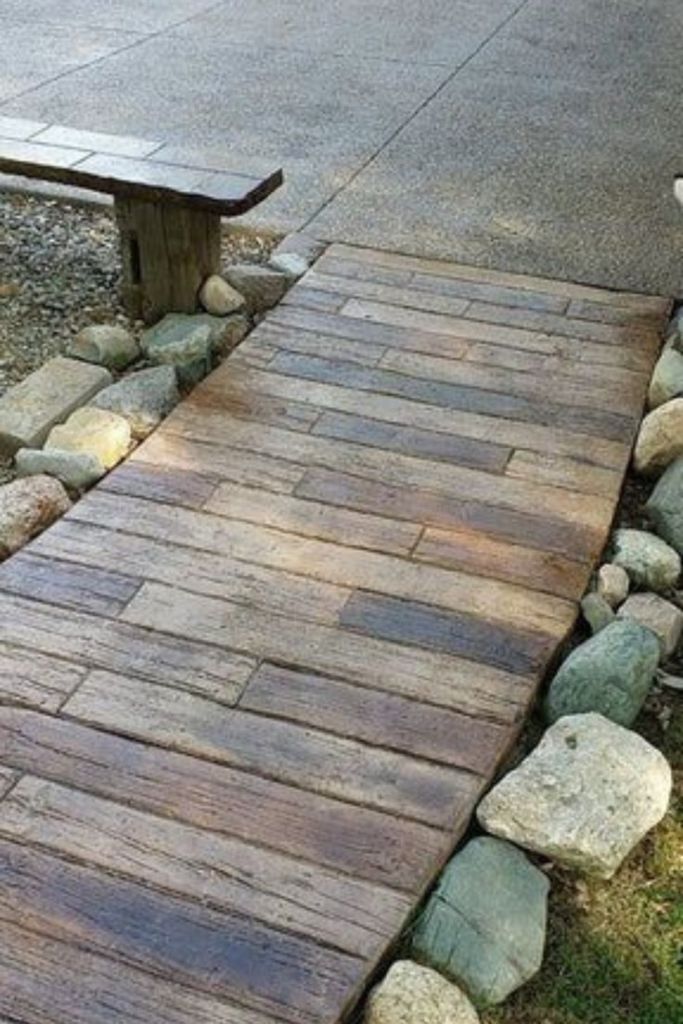
Creating a beautiful and functional garden pathway doesn’t have to be expensive. If you love DIY projects, pallet wood is a fantastic material for building unique and charming walkways. With a little creativity and effort, you can transform reclaimed pallet wood into stunning garden paths that add both style and practicality to your outdoor space.
Pallet wood is a favorite among DIYers because it’s affordable, sustainable, and versatile. You can arrange it in various patterns, combine it with other materials like gravel and stone, and even integrate lighting or planters for a more customized look.
In this guide, we’ll explore 10 creative pallet wood garden pathway ideas that will enhance your backyard. Plus, if you’re looking for professional woodworking plans, check out Ted’s Woodworking Plans for step-by-step guides on DIY projects!
Let’s get started!
1. Rustic Straight Pathway – The Classic Choice
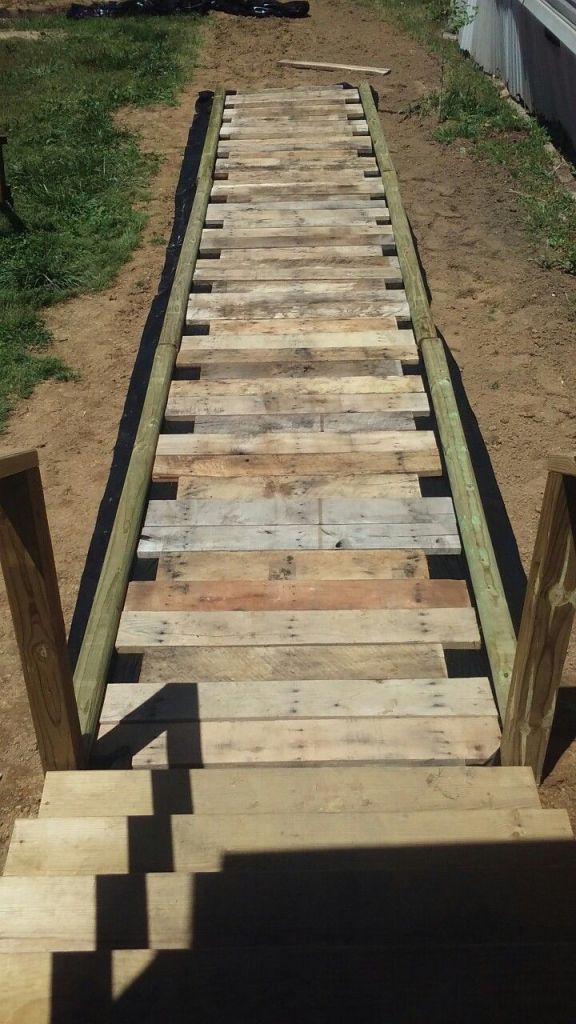
A straight pallet wood pathway is the easiest and most traditional way to enhance your garden. It provides a clean and structured look, ideal for leading to a garden shed, patio, or backyard seating area.
How to Build a Rustic Straight Pathway:
- Gather Materials: You’ll need pallet wood planks, a shovel, landscape fabric, nails, and a wood sealer.
- Prepare the Ground: Remove grass and weeds along the chosen pathway and level the soil.
- Lay Landscape Fabric: This prevents weeds from growing between the wood planks.
- Arrange the Planks: Position the pallet boards in a straight line. Adjust spacing to allow for slight expansion.
- Secure the Wood: Use nails, screws, or wooden stakes to hold the planks in place.
- Apply a Wood Sealant: This protects the wood from moisture and insects, ensuring durability.
Bonus Tips:
- Add small decorative stones or mulch between the planks for a stylish touch.
- Place solar-powered garden lights along the edges to illuminate the path at night.
2. Curved Pallet Wood Walkway – Adding Flow to Your Garden
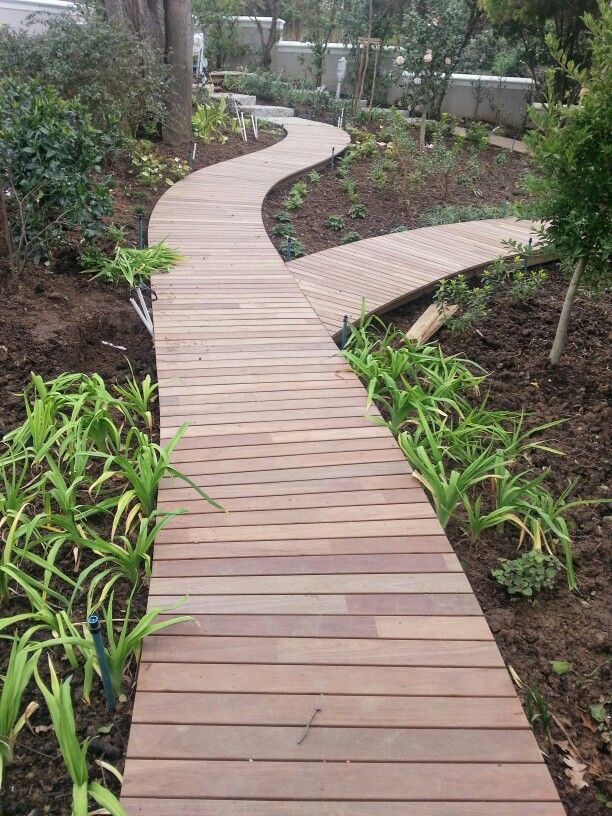
A curved pathway is a great way to create movement in your garden. Instead of a straight walkway, a curved design blends naturally with flower beds, ponds, or seating areas.
How to Build a Curved Pallet Walkway:
- Mark the Curve: Use a garden hose or rope to outline the desired shape.
- Cut the Wood: Trim pallet planks to fit the curve. Shorter planks work best for bending around curves.
- Secure the Boards: Attach each plank with screws or stakes to prevent shifting.
- Fill the Gaps: Use sand, pebbles, or gravel to fill spaces and ensure stability.
- Finish with Stain or Paint: This enhances the wood’s natural beauty and adds protection.
Why Choose a Curved Path?
- It softens the landscape, creating a more natural flow.
- Perfect for organic, free-form garden designs.
3. Mosaic Style Pallet Wood Path – An Artistic Approach
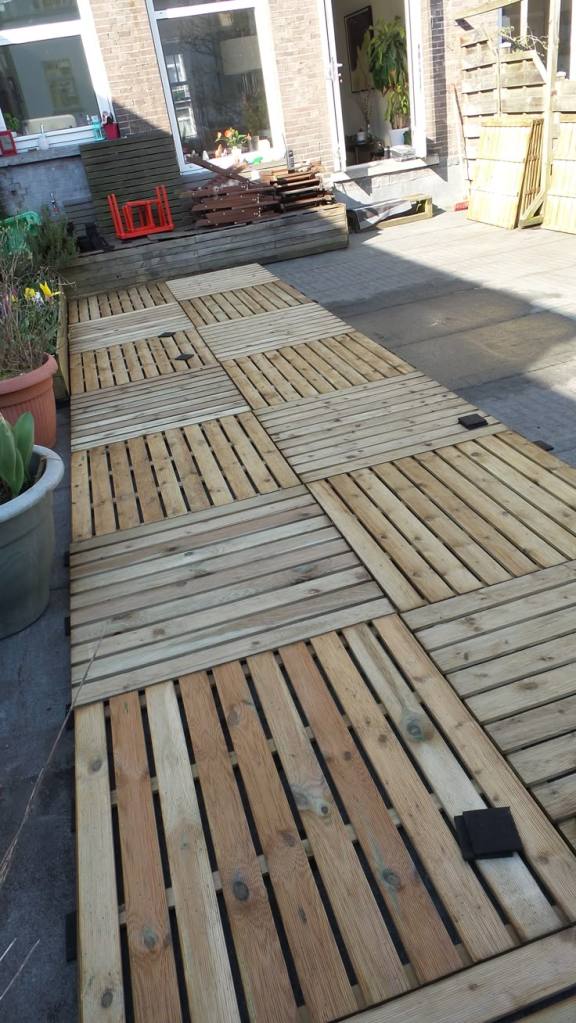
For a visually stunning effect, try a mosaic-style wooden path! This involves using various shapes and sizes of pallet wood to create an eye-catching pattern.
Steps to Create a Mosaic Pathway:
- Select Different Pallet Pieces: Use a mix of small, medium, and large wood cuts.
- Arrange in a Pattern: Play around with designs such as herringbone, chevron, or random layouts.
- Secure the Wood: Use outdoor adhesive, nails, or screws to hold the planks in place.
- Seal with a Protective Finish: Apply a weather-resistant wood sealant to extend the lifespan.
💡 Pro Tip: Combine pallet wood with colorful pebbles or tiles for added contrast!
4. Raised Pallet Boardwalk – Ideal for Wet Areas
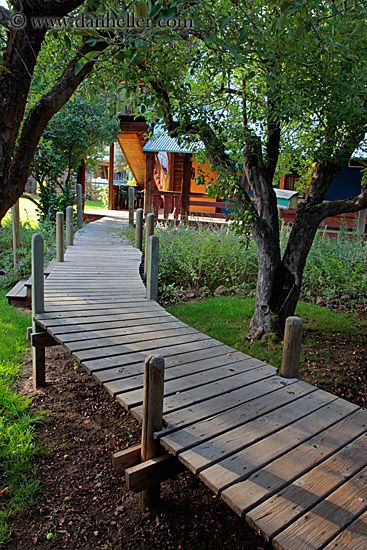
If your garden has poor drainage or gets muddy after rain, a raised pallet wood boardwalk is a perfect solution.
How to Build a Raised Boardwalk:
- Create a Sturdy Base: Lay down pressure-treated wooden beams as a foundation.
- Attach Pallet Wood Planks: Nail or screw the planks onto the base, leaving small gaps for water drainage.
- Secure the Structure: Add support beams underneath for extra stability.
- Apply Waterproof Stain: This protects against moisture, ensuring durability.
✅ Best For:
- Gardens with heavy rainfall
- Areas prone to flooding
5. Zig-Zag Pallet Wood Pathway – A Unique Twist
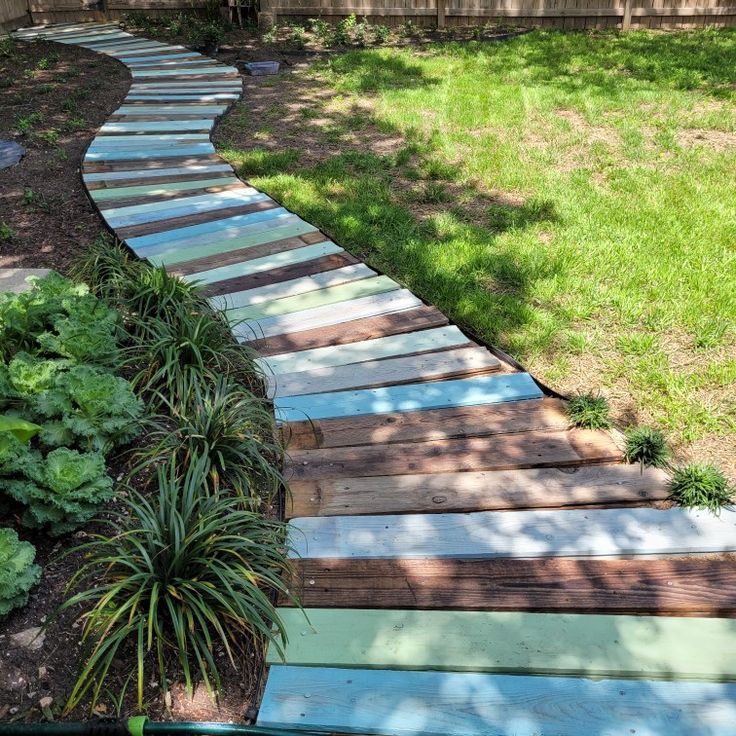
Want something bold? A zig-zag pathway offers a modern and geometric feel to your garden.
How to Design a Zig-Zag Path:
- Mark Out the Angles: Use stakes and string to outline the zig-zag shape.
- Cut Wood to Fit: Trim pallet wood at precise angles for a sharp look.
- Assemble and Secure: Nail or screw the pieces together.
- Add LED Strip Lights: Illuminate the edges for a stunning effect at night.
6. Pallet Wood Stepping Stones – A Natural Look
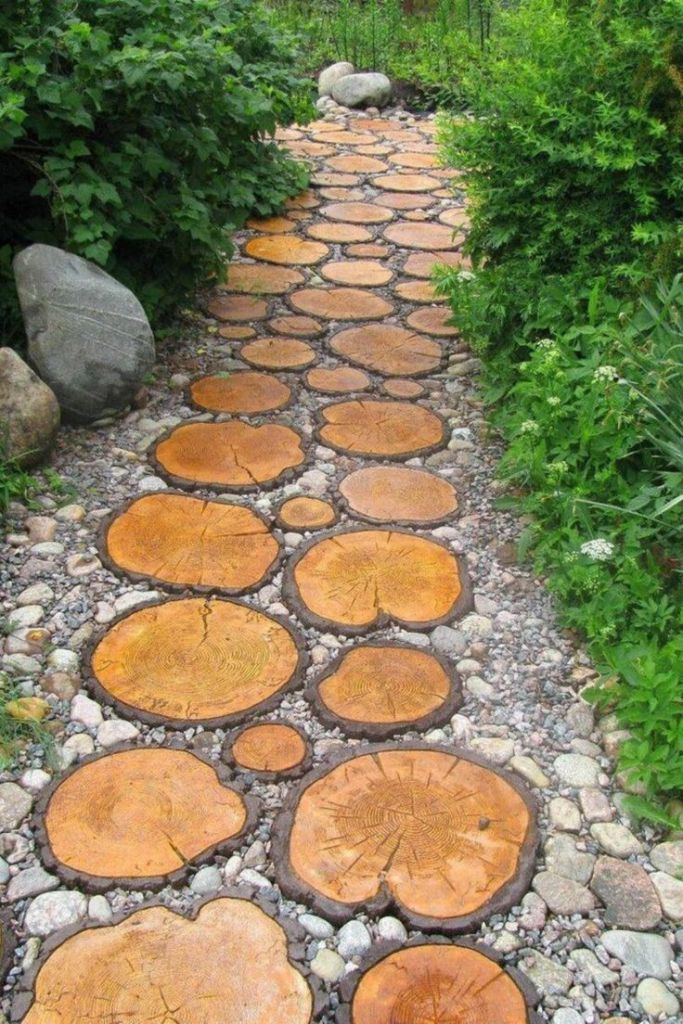
If you love a casual and natural garden look, pallet wood stepping stones are a great alternative to a solid pathway. Instead of a continuous path, wooden planks are placed at intervals like stepping stones, allowing grass, moss, or gravel to fill the spaces.
How to Create Pallet Wood Stepping Stones:
- Cut Pallet Wood into Even Pieces – Square or rectangular blocks work best.
- Prepare the Ground – Clear any grass or debris and level the soil.
- Place the Wooden Stepping Stones – Arrange them evenly along the desired path.
- Secure Each Plank – Slightly dig each piece into the ground or use stakes to prevent movement.
- Fill the Spaces – Use decorative gravel, mulch, or grass between the wooden stones.
- Seal for Protection – Apply a weatherproof wood stain to prevent rotting.
Why Choose Stepping Stones?
- Allows rainwater to drain naturally
- Blends seamlessly with a garden’s landscape
- Low maintenance compared to solid pathways
7. Framed Pallet Wood Pathway – A Polished Look
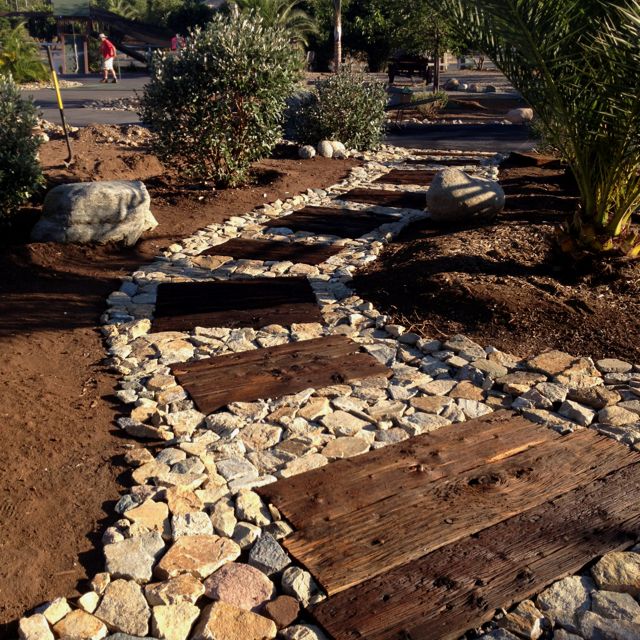
A framed pallet pathway includes a border around the wooden planks, making the path more defined and structured. The frame can be made from bricks, metal edging, or stone.
Steps to Build a Framed Pathway:
- Lay the Outer Frame First: Use bricks, timber beams, or metal edging.
- Cut Pallet Wood to Fit Inside the Frame: Ensure they align neatly within the border.
- Secure the Wood and Frame: Nail or screw the wood down and reinforce the frame edges.
- Seal for Protection: Use an outdoor wood finish to prevent decay.
✅ Best For:
- Formal garden spaces
- Neat and organized landscaping designs
8. Floating Pallet Path Over Gravel or Sand
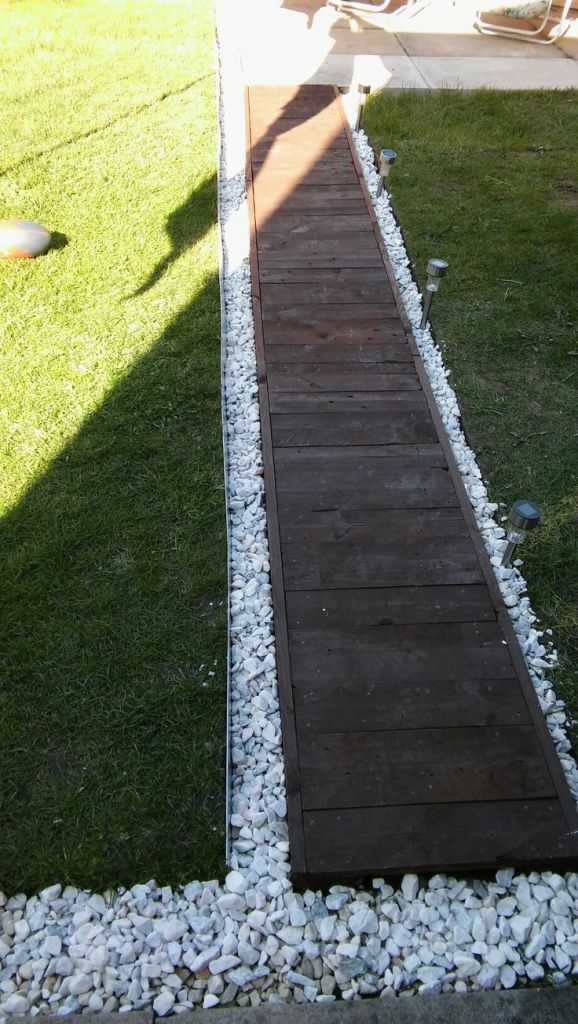
A floating pallet wood pathway is a stylish way to combine wood and stone elements. This design features wooden planks “floating” over gravel, sand, or pebbles, creating an elegant and Zen-like effect.
How to Build a Floating Pallet Path:
- Prepare the Base Layer: Spread a layer of gravel, sand, or crushed stone.
- Lay Landscape Fabric: Prevents weeds from growing through the gravel.
- Position the Wooden Planks: Space them evenly to create a “floating” effect.
- Secure Each Plank: Use hidden brackets or slightly embed the wood in the gravel.
- Finish with a Wood Sealant: Protects against moisture and insects.
Why Choose a Floating Path?
- Easy to install and modify later
- Perfect for Zen gardens or minimalistic designs
- Reduces maintenance by preventing weed growth
9. Interlocking Pallet Wood Path – Extra Strength & Durability
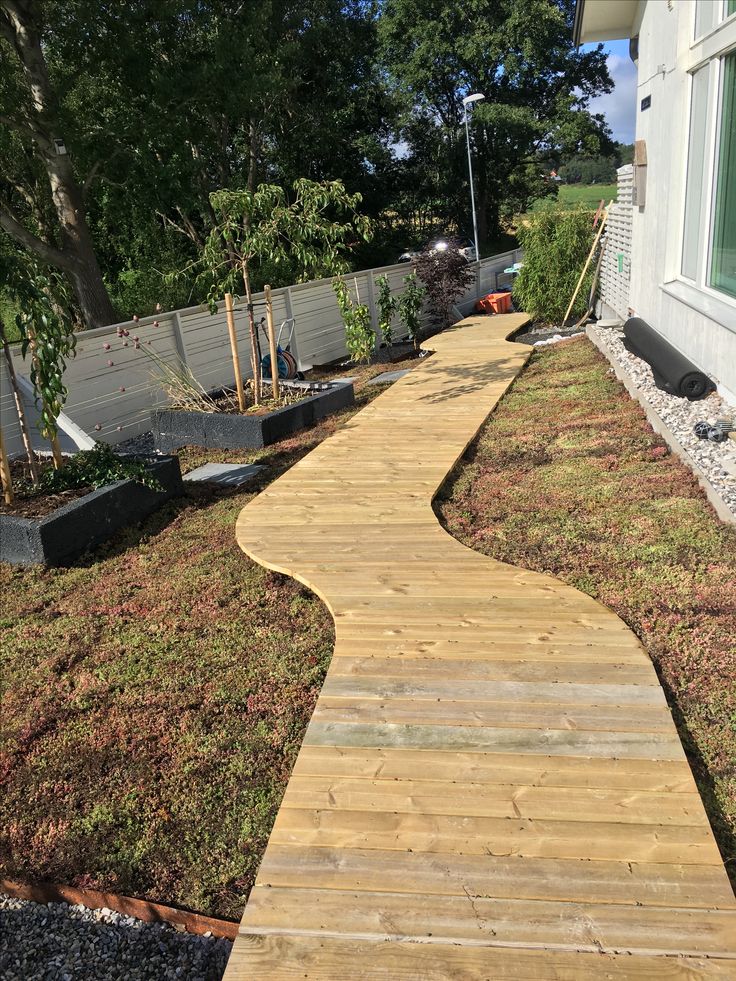
For a sturdy and long-lasting walkway, an interlocking pallet wood path is a great option. Unlike traditional pathways, interlocking wood planks create a seamless and connected look.
How to Design an Interlocking Path:
- Cut Pallet Wood Into Even Pieces – Aim for uniform sizes.
- Plan the Pattern – Arrange wood in a brick-lay or puzzle-like interlock.
- Secure with Screws or Nails – Prevents shifting over time.
- Apply Wood Treatment – Ensures weather resistance and durability.
💡 Pro Tip: This method is ideal for high-traffic areas like a backyard entertainment space!
10. Pallet Wood with Embedded Planters – A Garden Lover’s Dream
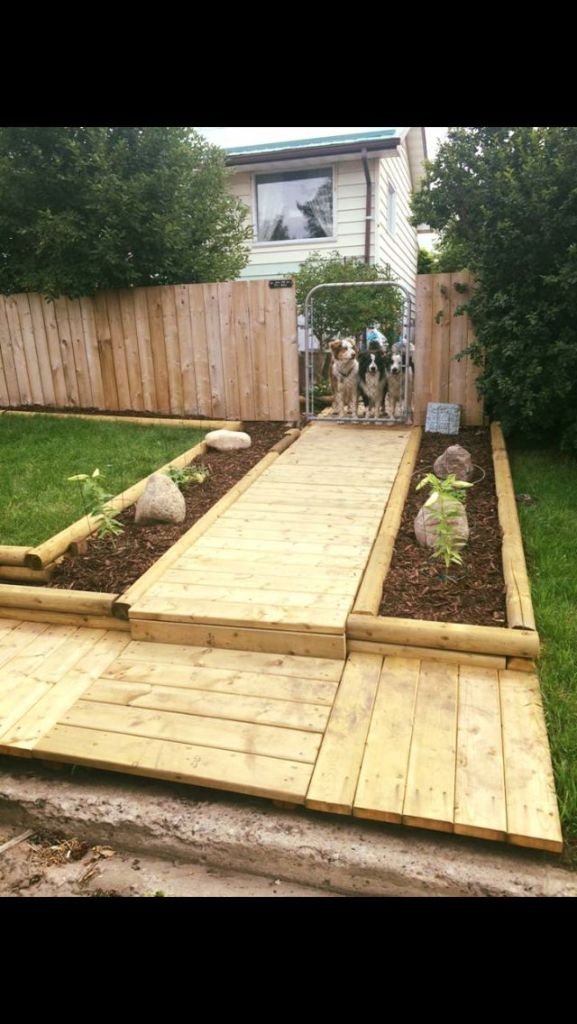
For a unique and nature-inspired look, try embedding planter boxes within your pallet wood path. This creates a living, green pathway where plants grow alongside the wood.
How to Add Planters to Your Pathway:
- Mark Where Planter Boxes Will Go – Choose areas to integrate planters.
- Cut Spaces in the Pallet Wood – Leave room for soil and plants.
- Build Small Wooden Boxes – Secure them within the pathway structure.
- Choose Low-Growing Plants – Opt for succulents, creeping thyme, or moss.
- Water & Maintain Regularly – Keep plants healthy and thriving.
✅ Best Plants for Embedded Planters:
- Creeping thyme (fragrant and hardy)
- Moss (moisture-friendly and soft)
- Lavender (adds beauty and scent)
This pathway blends nature and structure, making it a one-of-a-kind garden feature!
Maintenance Tips for Pallet Wood Pathways
To extend the life of your pallet wood pathway, follow these simple maintenance tips:
1. Protect Against Moisture & Rot
- Apply outdoor wood sealer annually.
- Avoid direct contact with soil—use gravel as a barrier.
2. Prevent Weed Growth
- Install landscape fabric under the pathway.
- Use mulch or crushed stone between planks.
3. Regular Cleaning & Upkeep
- Sweep away debris and leaves to prevent mold.
- Check for loose or broken planks and replace them as needed.
Why Choose Pallet Wood for Your Garden Pathway?
✅ Sustainable & Eco-Friendly
- Recycled wood reduces environmental impact.
- Can be repurposed and upcycled easily.
✅ Cost-Effective
- Free or cheap pallets can be found at local warehouses.
- No expensive materials needed!
✅ Versatile & Stylish
- Can be customized in various patterns & styles.
- Works well in modern, rustic, or natural garden themes.
📺 Watch This DIY Pallet Pathway Video for More Inspiration:
Read Also:
Final Thoughts & Inspiration
Creating a pallet wood garden pathway is a fantastic way to beautify your outdoor space while keeping it budget-friendly and sustainable. Whether you prefer a simple rustic path or an intricate mosaic design, pallet wood gives you endless creative possibilities.
💡 For expert woodworking guides, check out Ted’s Woodworking Plans. It includes detailed step-by-step instructions for DIY enthusiasts!
Now it’s time to grab some pallets and start your own garden transformation!
Frequently Asked Questions (FAQs)
1. How can I make pallet wood last longer outdoors?
Apply a high-quality outdoor wood sealer and avoid direct ground contact by raising the wood on gravel or supports.
2. Can I use pallet wood for a driveway path?
Pallet wood is not ideal for heavy traffic areas like driveways. However, it works perfectly for garden pathways and walking trails.
3. Do I need special tools to work with pallet wood?
Basic tools like a saw, drill, screws, and sandpaper are enough for most projects. A circular saw or jigsaw helps for more intricate cuts.
4. How do I prevent the wood from splintering?
Sand the wood thoroughly before installation and apply a protective finish to smooth out rough edges.
5. Where can I get free pallets for my project?
Check local hardware stores, warehouses, construction sites, or online marketplaces like Facebook Marketplace and Craigslist!
Affiliate Disclosure
This article contains affiliate links. If you purchase through these links, we may earn a small commission at no additional cost to you. This helps us provide free DIY guides and tutorials.
Discover more from WoodReality
Subscribe to get the latest posts sent to your email.
 WoodReality